
Border Countries
Russian Wedding Customs: Bread, Salt and Two Families Becoming One
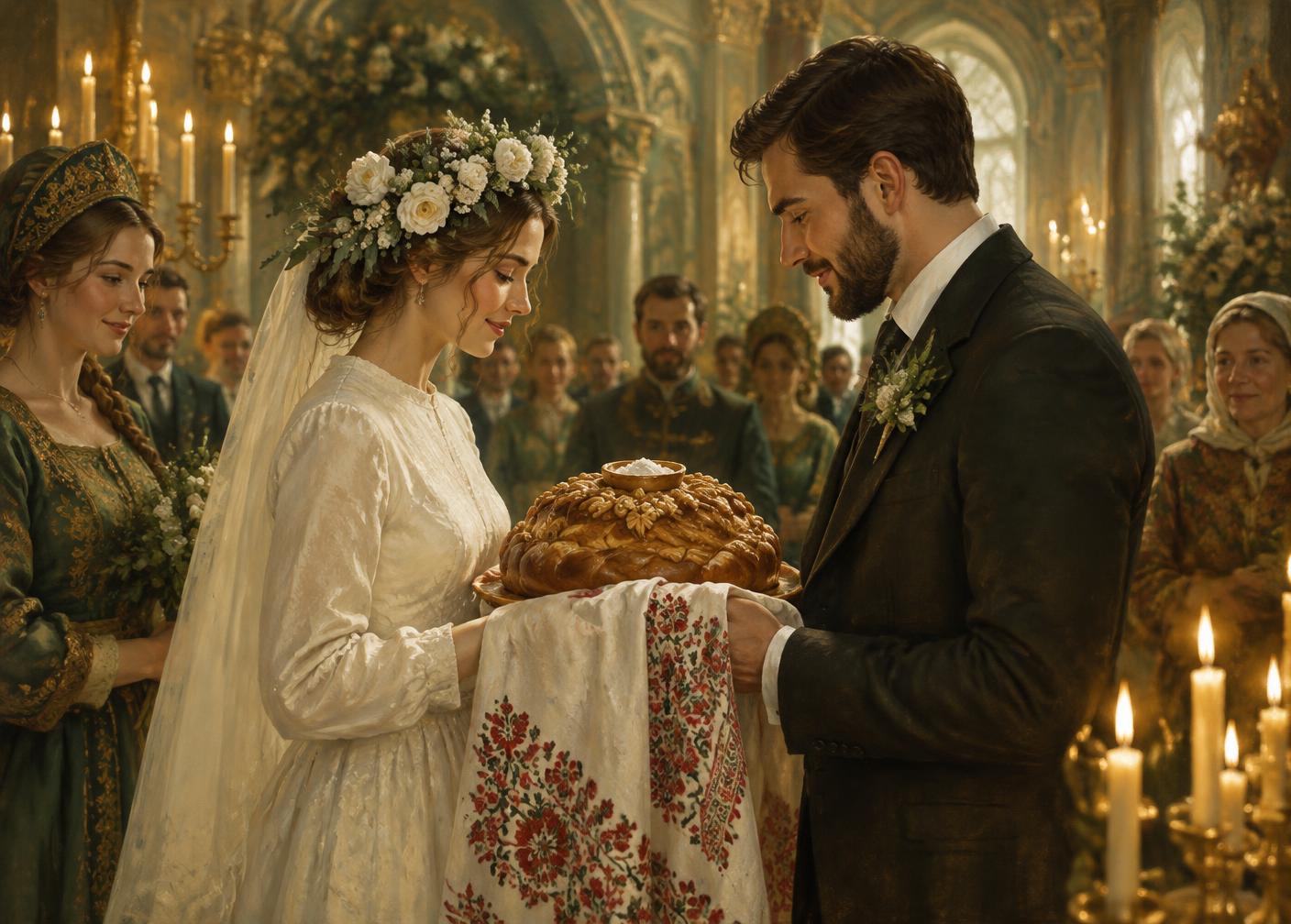
A Russian wedding is rarely a quiet affair. It is a day when two families do not simply attend a ceremony—they perform their blessing, their humour and their hospitality in front of one another. For a foreign man marrying a Russian woman, or a Russian-speaking woman from Kazakhstan, understanding these customs is a way of showing respect before a single word is spoken.
The ransom of the bride
The morning often begins with the vykrup nevesty, the ransom of the bride. The groom arrives at her family's home to find the door cheerfully barricaded by bridesmaids and relatives, who set him riddles, small tasks and good-natured negotiations before they let him see his bride. It is theatre, not commerce: the point is laughter and to prove he will make an effort for her. A wise groom arrives with small gifts, sweets and a sense of humour.
Bread and salt
At the reception, the couple may be greeted with the karavai—a round decorated loaf presented on an embroidered cloth, with a small dish of salt at its centre. Parents offer it as a symbol of prosperity and welcome. Tradition says the couple each tear a piece, and whoever takes the larger bite will be the head of the household. Most families today treat this as affectionate fun rather than prophecy.
The civil ceremony and the church
Legal marriage in Russia takes place at the civil registry office, the ZAGS, where the couple sign the register before witnesses. Some couples add a church wedding, the venchanie, with crowns held above the couple's heads; others prefer only the civil ceremony. Which path matters is a personal and family decision, shaped by faith and habit—worth discussing openly rather than assuming.
Toasting 'Gorko!'
At the banquet, guests call out 'Gorko!'—'bitter!'—and the couple must kiss to sweeten the occasion while the room counts the seconds. Between toasts come speeches, songs and dancing late into the night. The table is generous, and refusing hospitality entirely can seem distant; pacing yourself is an art worth learning.
What a foreign groom should know
Customs differ between cities, villages and individual families, and many modern couples choose only the parts they love. Ask her which traditions her family holds dear, learn a few words of a toast, and bring patience and good humour. Those two qualities will carry you further than any perfect knowledge of ritual.
Beyond the wedding day
For a wider introduction to culture, education and family values, read our guide to Russian women. Customs vary from family to family; let her tell you which ones matter in her home.
Further reading: https://www.everyculture.com/No-Sa/Russia.html