
Border Countries
Chinese Wedding Customs: The Tea Ceremony, Red Silk and Family Blessings
A Chinese wedding carries thousands of years of meaning in its colours, its cups of tea and its banquet tables. Yet it is also, increasingly, a modern celebration shaped by a couple's own choices. For a foreign man marrying a Chinese woman, the customs below are a map—but her family is the territory.
Why everything is red
Red is the colour of joy, luck and celebration. The bride may wear a red qipao or an embroidered kwa, the invitations are red, and guests give money in red envelopes called hongbao. White, by contrast, is associated with mourning and is avoided. Even couples who marry in a white Western-style gown often change into red for parts of the day, honouring both worlds.
The tea ceremony
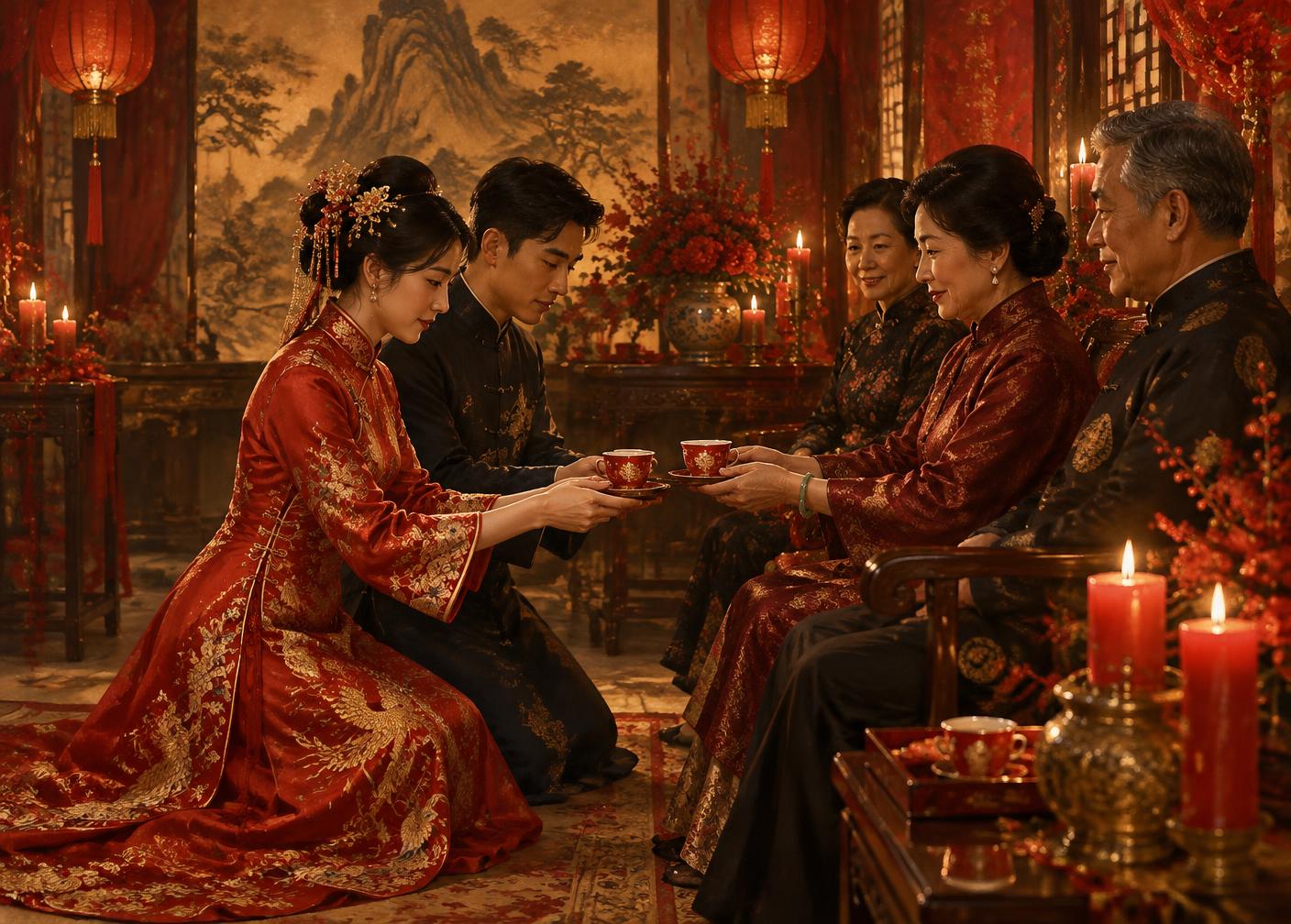
The tea ceremony is the emotional heart of many Chinese weddings. The couple kneel and serve tea to their parents and elders in order of seniority. In accepting the cup, each elder welcomes a new member into the family, often giving a red envelope or jewellery in return. It is a quiet, formal moment in a loud day—and it says clearly that marriage joins families, not only two people.
The gate games
Before the groom may collect his bride, her friends and sisters traditionally block the door and set him playful challenges: answering questions about her, performing songs or exercises, and negotiating red envelopes. Like the Russian ransom of the bride, it is affectionate theatre—a way for her friends to test his devotion and for everyone to begin the day laughing.
The banquet
The wedding banquet is an elaborate multi-course feast, sometimes with a dozen dishes chosen for their fortunate names and meanings: fish for abundance, noodles for long life, sweet lotus seeds for children. The couple visit every table to toast their guests, and the bride may change dresses several times through the evening.
What a foreign groom should know
China is vast, and customs differ greatly between regions, cities and families; many urban couples now blend a registry-office marriage, a tea ceremony and a Western-style reception. Practical paperwork for a foreign spouse can be detailed, so begin it early and patiently. Above all, ask her and her parents which rituals they treasure—being invited to take part respectfully matters far more than performing every custom flawlessly.
Beyond the wedding day
For a wider introduction to tradition, ambition and modern marriage, read our guide to Chinese women. China is vast; her family's customs may differ from every general description—including this one.
Further reading: https://www.everyculture.com/Bo-Co/China.html