Women of Kazakhstan
Tatar Women in Kazakhstan: Heritage, Faith and Hospitality
Tatars have lived in the Kazakh steppe for centuries. Merchants, teachers and imams from the Volga region helped found mosques and schools in towns such as Semey and Petropavl in the 19th century. Today the 2021 census counts around two hundred thousand Tatars in Kazakhstan.
Close languages, shared roots
Tatar and Kazakh are both Kipchak Turkic languages, so many words, proverbs and wedding songs feel familiar on both sides. Most Tatar families in Kazakhstan also speak Russian fluently, and many speak Kazakh.
Faith as a personal path
The Tatar community is historically Sunni Muslim. Some women are observant, others more cultural in their practice. A thoughtful suitor asks rather than assumes, and respects whatever she chooses.
Hospitality and the table
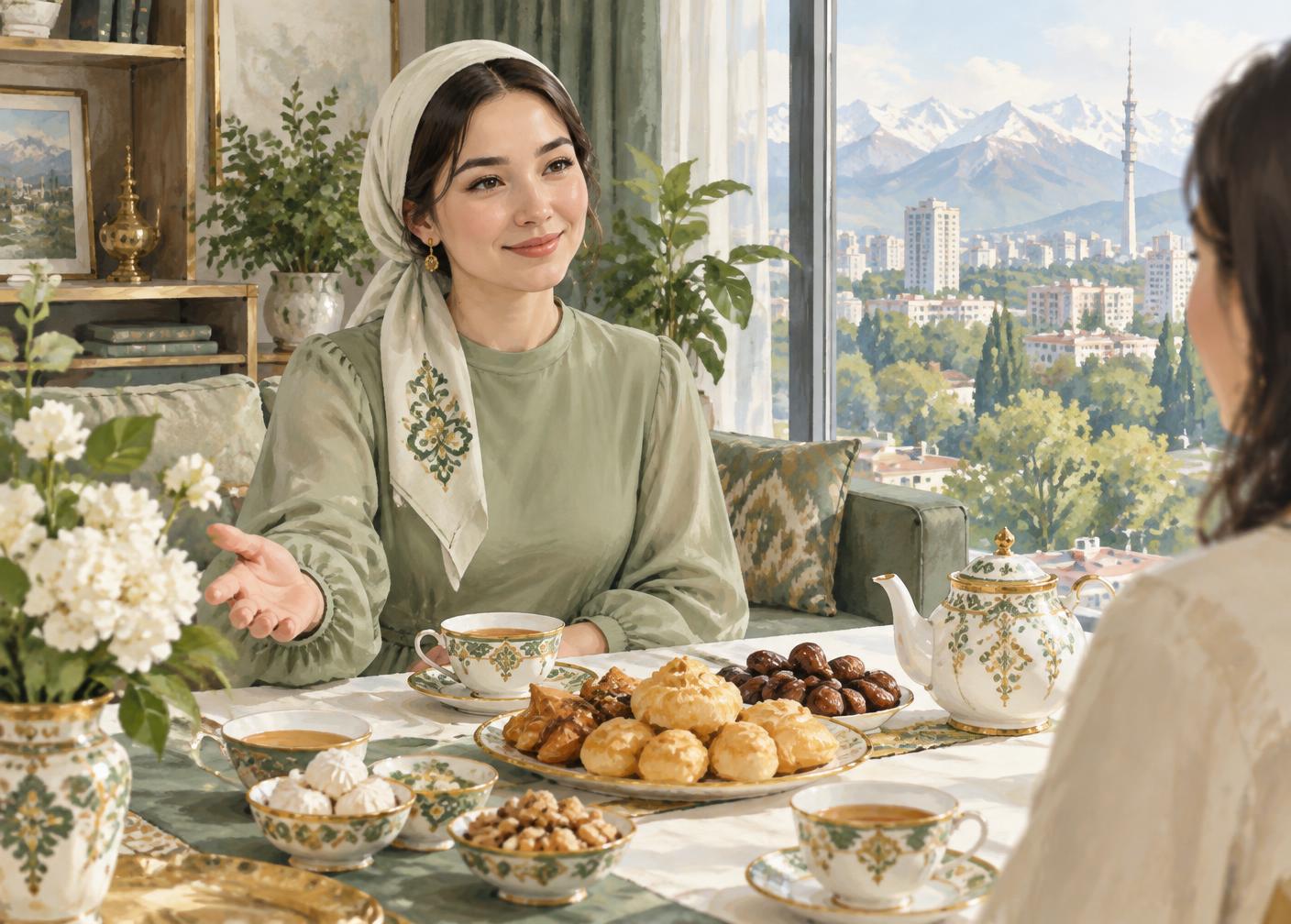
Chak-chak with tea, echpochmak pastries and long family dinners are part of Tatar hospitality. A visit to her parents is usually a meaningful step, not a formality.
Weddings
A Tatar wedding often combines a nikah with a family celebration; customs such as the groom's gifts to the bride's family vary between households. Ask her family what matters to them.
Shared faith, different family customs
Our guide to Muslim marriage in Kazakhstan offers wider context for discussing faith and marriage. Tatar and Kazakh family customs need not be identical; ask which traditions matter to her.
Education and ambition
Tatar families have long valued schooling—Tatar jadid educators were pioneers of modern Muslim education in the region. Many women today work as doctors, teachers, lawyers and entrepreneurs.
Every woman is an individual first. Our matchmaker can help you begin a respectful conversation.